


For years, I was making a HUGE mistake with my small group instruction without even realizing it! Read on to find out what I was doing wrong and the minor change in my mindset that lead to more effective small group instruction for students.
If you’re new to small group instruction, you may want to start by reading my Getting Started Guide for small group instruction! Or you may also want to check out the following posts in the series about Reading Small Groups:
This post includes affiliate links for which I may make a small commission at no extra cost to you should you make a purchase.
What Mistake Did I Make?
The way I use to plan my guided reading may be similar to how you currently plan for your groups. I always started by picking a book that was at students’ reading level. I completed my lesson plan template based on what they needed to know and do to demonstrate comprehension for that specific book. This included listing the vocabulary words students needed to know, writing comprehension questions about the story, and selecting sight words and phonics skills from the text.
So you may be asking yourself, “what is so wrong about that?” I began to realize that I was teaching students how to comprehend a specific book. Students could read and comprehend that text but it wasn’t transferring to other books. Each book was being taught in isolation. I was teaching students how to read a specific book instead of how to be a reader.
How Did I Fix It?
I spent a lot of time reflecting on what my ultimate goal is for my guided reading instruction. This helped me completely change my mindset and how I approach small group planning. Instead of starting with the book, I first think about what skill or strategy I want to teach.
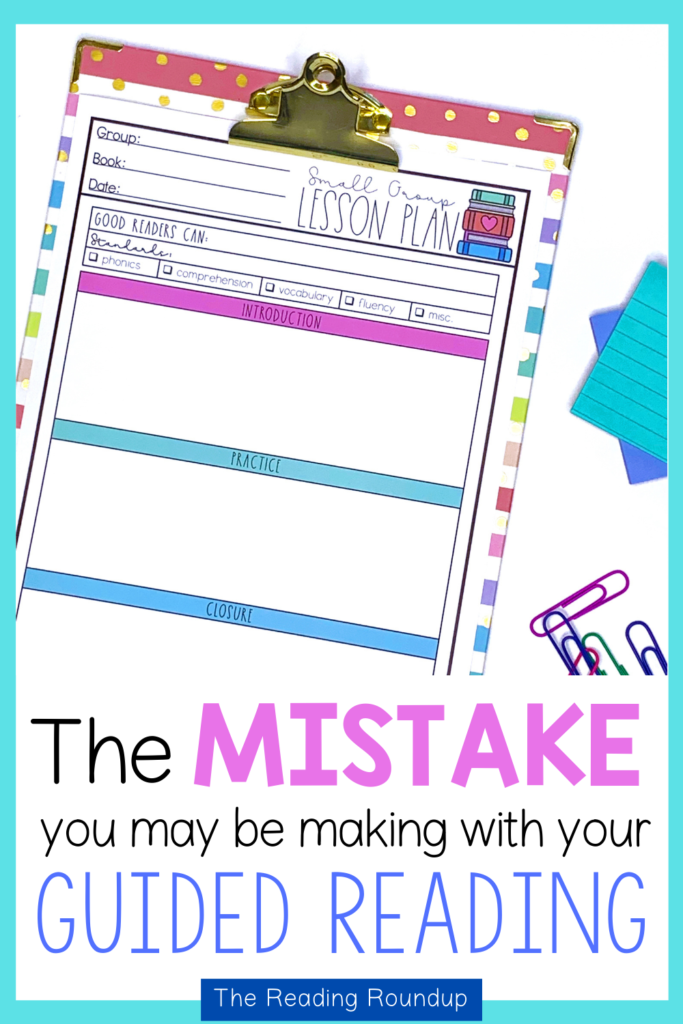
My ultimate goal became to teach students a strategy or skill that they can apply to ANY text. I added the phrase “Good Readers Can…” to my lesson plans as a way to maintain my focus for the lesson. What do I want students to be able to do as a reader that would work for any book? Download the small group lesson plan templates I use or get free sample templates below!

Examples of Good Reader Statements
These statements can focus on strategies for any component of literacy instruction: decoding, vocabulary, fluency, or comprehension. Try to write the statements in student-friendly terms so they can easily understand and remember the strategy.
Good Readers Can…
- Ask questions as they read.
- Stop and jot notes to remember what they read.
- Read with expression to show the character’s feelings.
- Flip the vowel sound in an unknown word.
- Use clues in the text to determine the meaning of a word.
If you’re looking for more ideas for specific strategies, you can download the freebie at the end of this post! You may also want to check out these phenomenal resources!


How Do My Small Groups Look Now?
During my small group lessons, I model the strategy for students using a think aloud. They’re then provided with time to practice the strategy with my support. I end the lesson by restating the strategy or skill that we had been practicing.
Before students leave my room, we do a brief exit ticket. Usually, this is just a quick verbal response. I will ask them to explain the strategy we practiced. (I don’t have them just name it because that doesn’t help them internalize the strategy or take ownership of it). Other times I may ask them if they found the strategy helpful and why or why not. Doing so helps students begin to understand and take ownership of the strategy at a deeper level. They also begin to realize how it benefits them as a reader. Once they see how a strategy helps them, they start implementing it during other books we read together or while reading independently.
I have been thrilled by what a tremendous impact this change in mindset has made with my students. They have become much more confident and active readers. As a reading specialist, I work with reluctant readers who typically try to avoid reading. But now they are so engaged and LOVE to read. They’re empowered because they have strategies and now know how to feels to be a READER!

What Can You Do for More Effective Small Group Instruction?
Begin using the phrase “Good readers can…” when planning your instruction to ensure that you have a clear focus and a specific strategy in mind. This should be a skill or strategy that is not just focused on a certain book but can be applied to any text. Making this simple adjustment to your lesson planning will lead to more effective small group instruction. Sign up below to receive FREE lesson plan templates to help you get started!
This mindset does not just apply to small group instruction. Teachers should also be thinking this way when planning their mini-lessons. It can also be applied during writing workshop using the phrase “Good writers can…”

Want to Pin this for later?




Such a great resource