


Reading Small Groups are an essential component of the Reading Workshop; however, they can also be quite intimidating for some teachers. There are many factors to consider when planning for your reading small group instruction. Hopefully, this list of reading tools for small groups will help you get started!
You may also be interested in these other post about reading small groups:
- Getting Started Guide for Small Groups
- Small Group Lesson Plans
- Informal Assessments for Small Groups
Reading Tools for Small Groups
We all know teachers spend a lot of their own money each year on their classrooms! As a result, I’ve broken down the tools in to Must-Have and Nice-to-Have lists. If you’re a newer teacher, focus on building up the tools in the must-have list first, even though the nice-to-haves can be very tempting!
I’ve compiled an Amazon list to make it easy to shop for items included in this post!
This post includes affiliate links for which I may make a small commission at no extra cost to you should you make a purchase.
Must-Have Tools for Students
The tools on this list are standard tools for reading small groups. These tools are the ones you will use daily!

- Authentic Texts – Use authentic texts with students to teach the skills. Short leveled readers, chapter books, engaging articles, etc are more preferable than test prep passages with corresponding questions for small groups.
- Magnetic Letters – Students will use these daily to make sight words or for word work activities (change sounds to make new words). You can also use paper letter tiles for these tasks until you can purchase magnetic letters.
- Post-It Notes – Students can use post-it notes for quick writes about the book to demonstrate a comprehension of the story.
- Whisper Phones – These are great for younger readers. It allows students to read aloud while not disrupting other students in the groups.
- White Boards – So many ways you can use white boards with your small groups: phonics activities, sight words, sentence dictation, written response to answer questions about the story, and so much more!
- Writing Tools – It’s nice to have a variety of writing tools available: pencils, pens, markers, dry erase markers, colored pencils. It’s up to you what you want to use with your groups!
- Graphic Organizers – It’s helpful to have sets of 6 already prepared for your commonly used graphic organizers. Some to include: retelling, character analysis, inference, main idea, connections. Read my post about how I organize my reading graphic organizers!
Nice-to-Have Tools For Students
You can still have effective small group instruction without these items, but they can make your groups more effective and engaging. Sometimes we just need to change things up in our small groups by adding some fun elements.. Some of these items may not be necessary for all students, it’s just based on the needs of your groups.

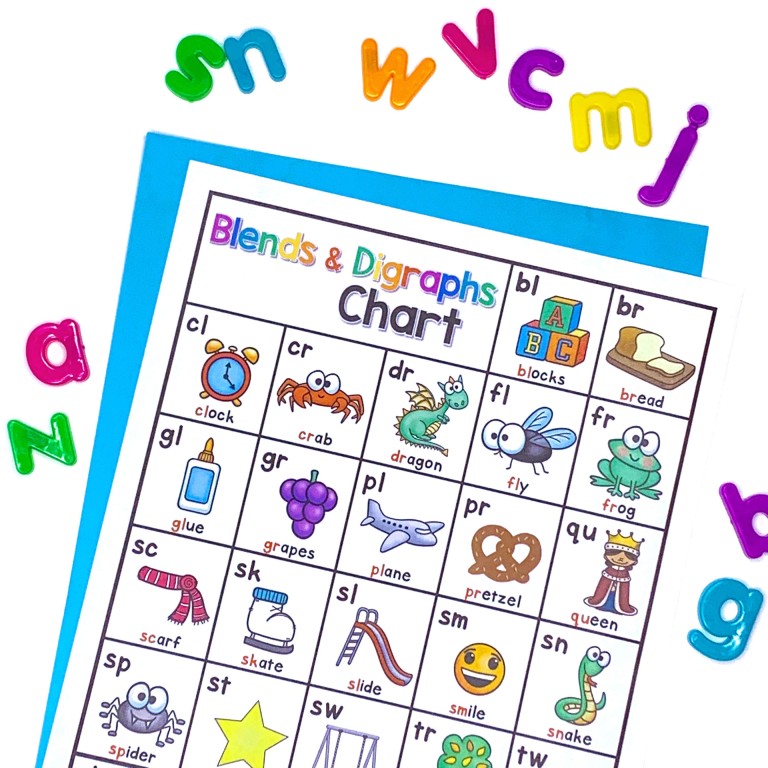
- Alphabet & Blends Chart – Kindergarten through 2nd-grade students may need to refer to the alphabet chart or a blends chart when reading or writing. Use the provided links to download FREE charts!

- Dry Erase Pockets – These come in handy to avoid having to make copies for your groups! I keep masters of the graphic organizers I commonly use. Students can put them in a dry erase pocket to reuse!
- Flashlights – These are a fun novelty item to use to practice writing sight words in the air or to spotlight certain words in their books. The finger flashlights work perfectly!
- Guide Strips – Some students who struggle with tracking while reading benefit from these guide strips to help them focus on one line at a time.
- Highlighter Tape – Perfect to use to highlight specific sight words, punctuation, or phonics components depending on the focus for the lesson.
- Magnadoodles – Another fun novelty item students can use to practice writing sight words or completing word work activities. Be sure to purchase the mini versions to save money. You can often find them at the Dollar Store or sometimes in Target’s dollar bins.
- Magnifying Glasses – Students can use these to search for specific sight words, phonics components, or text evidence to support their answers. Just a fun way to change things up!
- Pointer Fingers & Tools – These are helpful for students who struggle with one-to-one tracking. Be sure to only use these as a scaffold because eventually, you want students to read fluently and not word by word.
- Slinkies – The mini slinkies are a fun tool to use to help students stretch out a word. As they sound it out, they slowly pull the slinky apart and then smoosh it back together as they say a word. You can also use rubber bands as a cheaper way to accomplish the same task!
Reading Tools for Teachers
These are tools that teachers should have in order to plan more effective small group instruction.
- Anecdotal Notes Forms – You’ll want a system for taking notes on students’ progress during your small groups.
- Data Sheets – There are a variety of data forms and checklists for progress monitoring.
- Lesson Plans – While you had your daily lesson plans, it’s also beneficial to have additional plans specifically for your small groups. I like to keep them in a binder (along with the data sheets) that always stay at my guided reading table.
- Next Step Forward in Guided Reading by Jan Richardson – Jan Richarson is THE guided reading guru. I’ve learned everything I know about guided reading through her books, videos, and professional development sessions. This is a must-have book for teachers!
- Post-It Notes – While these were the list for students, they’re also helpful for teachers. You can use them to mark stopping points in the book where you want students to reflect or respond to a comprehension prompt.
- Reading Strategies – You’ll want specific reading strategies to teach students that they can eventually implement independently. I’ve had tremendous success with these Decoding Strategies.
- Reading Strategies Book by Jennifer Serravallo – This book is extremely beneficial for planning your small group instruction. It provides specific strategies organized by skill and reading level that you can easily introduce during small group lessons.
- White Board – I recommend getting a desktop white board that has a pocket chart on the back. You can easily use it to model all of the tasks for your small groups!


Be sure to visit the Amazon list for a one-stop-shop for the reading tools for small groups featured in this post! You can also download this FREE checklist!
Which of these tools do you already use? Anything else you’d add to the list? Share in the comments below!
Want to Pin this for later?


