Independent reading benefits can be immense for your students – if done correctly. These tips are guaranteed to make independent reading time more effective and beneficial for your students. They will also allow you to be more productive during that time as well!
Independent Reading Benefits
Independent reading greatly benefits students of all ages. It allows students to:
- Learn about themselves as readers. They can discover their favorite genres, authors, series, etc.
- Practice applying the reading strategies they’ve learned in an authentic manner.
- Build reading stamina.
- Improve their reading comprehension and ability to think about the text.
- Build their vocabulary.
- Improve their reading fluency.
- Share their thinking about the text (either in writing or orally) which helps deepen understanding and provides opportunities for peer collaboration.
Independent Reading Tips
Set Reading Routines
Teachers need to devote time to independent reading every single day. One way to do this is to establish a structure for your reading workshop.
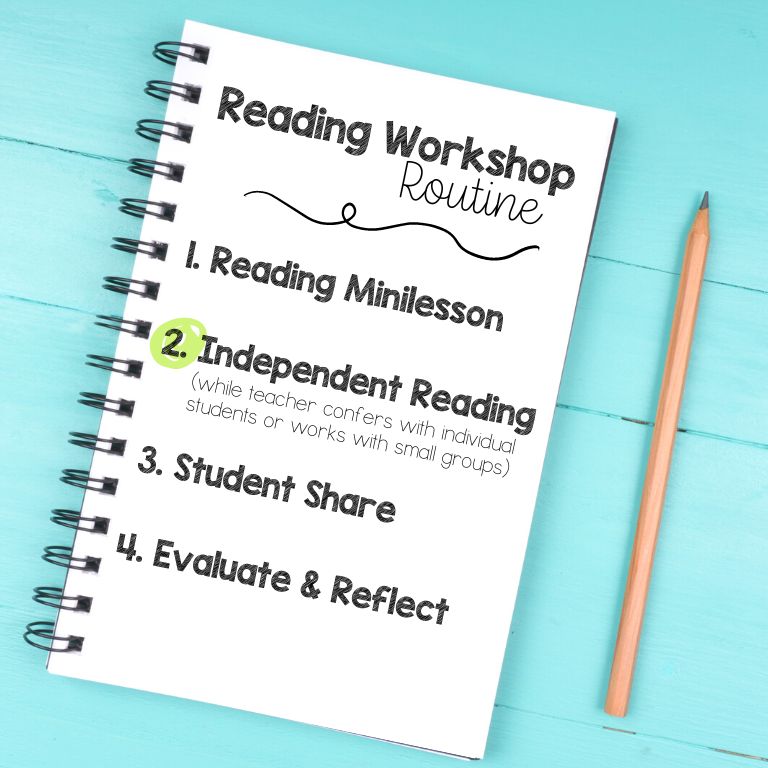
A common structure begins with a reading minilesson followed by independent reading. While students are reading, the teacher works with small groups or confers with students. Following independent reading, it is beneficial to provide time for students to share about their reading. As a class, you may want to evaluate how the workshop went that day. Discuss what students felt went well or any aspects they can improve upon tomorrow.
Establish & Model Expectations
It is essential to establish independent reading expectations so students know what behaviors you’re looking to see. They need to know what they should be doing and how it should look/sound.
You’ll want to take time to explicitly model and practice these independent reading strategies at the beginning of the year. (And you may need to remind students of these expectations throughout the year). Doing so will lead to a more effective literacy block.


Take time to determine the expectations you’d like to have established. Such as expecting students to have a book or choose from the classroom library instead of wasting their reading time going to the school library.
Possible Expectations to Establish:
- What does independent reading look like
- What does independent reading sound like
- How to find a just-right book
- Browsing the classroom library
- Returning books to the classroom library
- Setting up a page in their Readers Notebook
- Writing about their reading
- Knowing when to abandon a book
Build Reading Stamina
Reading stamina is a struggle for students initially. They are expected to maintain focus and actively read for extended amounts of time. They won’t get there right away. You’ll want to start small and gradually work your way up.

Set a timer to see how long students can maintain focus. Once a student is off task, out of their seat, or chatting to a neighbor the timer stops. The goal is to increase the amount of time with each attempt. You may want to track progress on a poster as motivation!
Set Purpose for Reading
Students need to have a purpose for reading. That can be completing a reading response activity, reading challenge, or another task for student accountability. But there does not always have to be an assigned task. The purpose for reading can strictly be for enjoyment! Students may become reluctant to read if it always comes with work to do. They can also be working toward a class or individual goals that day. No matter what the purpose for reading, students need to know it. Doing so will help them be more productive with their time.
Allow for Choice
Students should be given choices during independent reading. They should be choosing the books they read. This provides them an opportunity to explore new genres, series, and authors. We assign students text and corresponding tasks enough that this should be their chance to authentically practice reading strategies with a book of their choice.
Some students may need help choosing a book. You may see certain students spending a lot of the independent reading time looking for a book. You may want to start having Book Talks during the day to introduce students to new books. Administering reading interest surveys can also be a great way to provide students with recommendations based on their interests.
Allowing students to decide how they respond to the text will increase their engagement. Some students may prefer to work on a one pager about the text while another student needs to Stop & Jot to remember what was read. You can provide choice boards or reading challenges to help change things up to prevent students from losing interest.

Providing flexible seating choices allows them to be more comfortable while reading. Let them sit under a table, on a comfy pillow, or with their feet up. These simple options lead to improved engagement and stamina.
Hold Students Accountable
If you don’t establish some routines for holding students accountable, then their independent reading time may not be as beneficial. Students might waste time searching for books or staring at the pages instead of actively reading. They need accountability tasks to show what reading they accomplish each day.

Readers’ notebooks are a great place to start. It can be a composition notebook or 3 pronged folders with lined paper. Students can use this every day for any accountability task you assign. It is easy for them to find and keep all of their written responses in one place.
Emergent Readers
Independent reading may look different in the primary grades. Students who are still learning to read may not have the stamina or decoding skills to read independently. Here are some suggestions for those students:
- Reread books from students’ individual book boxes which may be books read during small groups.
- Reread poems.
- Reread books that were previously read aloud to the class.
- “Read” a story using the pictures.
- Read with a buddy.
- Listen to an audio book.


What additional independent reading benefits have your students experienced? What other tips have made that time more effective? Share in the comments!
You can get started using the Independent Reading Posters in your classroom! Or download the free Good Fit Books Reading Posters below!
Want to Learn More?
Check out the other blog posts in the independent reading series!


Want to Pin this for later?