Teaching feelings in the elementary classroom can accomplish a variety of objectives: for both social-emotional and academic learning. This roundup post includes various ways you can use feelings to teach multiple skills.
Teaching Feelings
School counselors and teachers help students understand and express their feelings. They also provide students with tools and strategies for how to manage those feelings. One beneficial tool is this FREE Emotions Chart to teach students about their feelings.

Emotions charts are especially helpful for students who are developing their language skills. It can help them learn the words for how they are feeling. This may be an English language learner or a special education student who struggles with expressive language. When a student does not have the words to express how they feel, they can use the emotions chart with faces as a tool to express their own feelings.
Teaching Vocabulary
It is important for students to be able to express their feelings using their emotional vocabulary. This knowledge allows them to let others know how they’re feeling and build empathy towards others’ emotions. We can also increase students’ vocabulary by teaching them synonyms for common emotion words. This helps with both their reading and writing abilities. Learn about additional activities for building students’ emotional vocabulary.
A feelings charades game is one of the most effective and engaging ways to build students’ emotional vocabulary. Students act out emotion words while other students have to guess how they’re feeling.

Character Emotions to Teach Reading
Teachers can also teach feelings through reading. Students can analyze the characters to determine how they’re feeling and how this can impact the story. Character analysis activities are also a perfect way to practice making inferences by looking at characters’ words, thoughts, and actions. Find out more specific ways for teaching reading with character emotions.
Writing Instruction
Teaching feelings benefits students’ writing ability by encouraging them to add more details to their stories. By incorporating characters’ emotions it develops a deeper and more interesting story. The Show, Don’t Tell Writing Strategy is perfect for accomplishing this! Students must add details that TELL that reader how the character is feeling versus just explicitly stating how they feel.


Bonus – Free Resources
The beginning of the school year is the perfect time for teaching feelings to your students. The start of school can cause a wide range of emotions for students. These FREE Back to School Activities will help your students express how they’re feeling, add details to their writing, and infer how characters are feeling. Download the FREE Show, Don’t Tell Anchor Chart!
Other Activities for Teaching Feelings
What other activities have you implemented to incorporate feelings into your instruction? Any other ideas for enhancing lessons by teaching feelings? Share in the comments below!
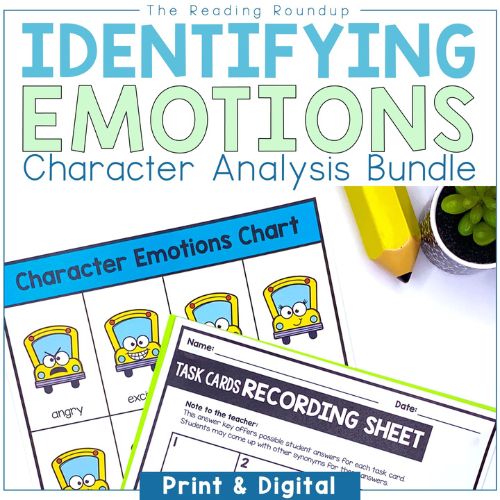
Check out the Identifying Emotions: Character Analysis Bundle filled with essential tools and engaging activities for teaching feelings all year long!
Want to Learn More?
You’ll love these related posts!



Want to Pin this for later?