


Administering Reading Surveys has made a tremendous impact on my students’ motivation and academic success. If you aren’t using them already, they are definitely worth finding a few extra minutes to administer with your students! You can find out more by learning what reading surveys are and why you should be using them. But once you’re convinced about the benefits of reading surveys, you can read on to find out HOW to administer them!
Ways to Administer Reading Surveys
Teachers have 3 different options for administering reading surveys: paper and pencil, interactive digital versions, and Google Forms. Find out more about each option to determine which one would be the best fit for your students.
Paper & Pencil

Administering paper and pencil versions of the surveys allows for student differentiation. Younger students and reluctant writers can draw their answers instead of writing them. It is also beneficial to read aloud the survey questions to students who may need extra assistance. This option also allows teachers to explain the questions or provide examples when students are unsure of what to write.
Digital Surveys
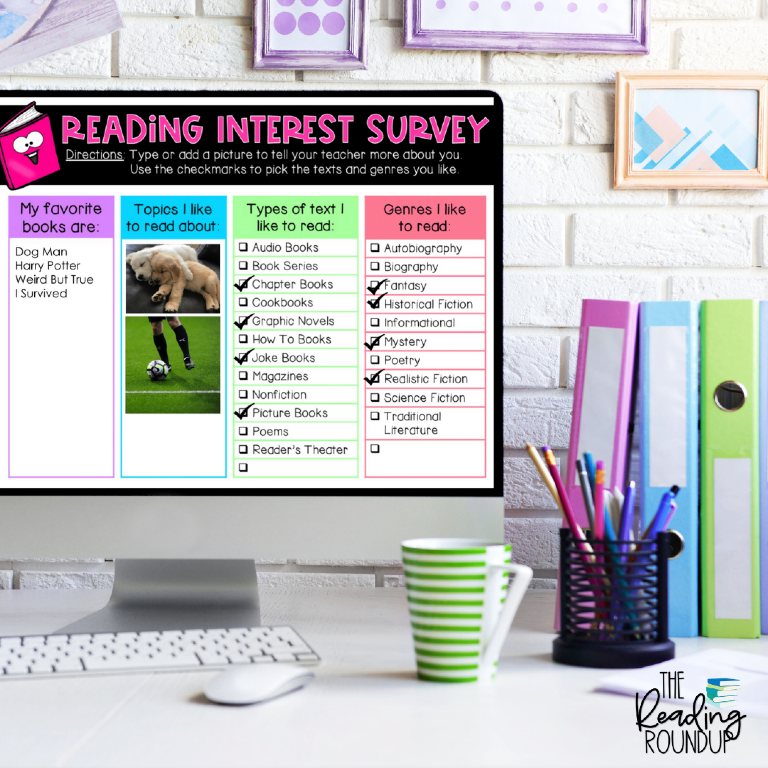
I used to only administer paper/pencil versions of the surveys, but in March 2020 Covid entered and completed changed how we teach! As a result, teachers were forced to provide digital options for everything. But this change was a very exciting improvement to how surveys are administered. The interactive format of Google Slides and Microsoft Powerpoint allows students to drag icons to select their responses and type in their answers. Makes it a bit more fun to complete the same task!
Google Forms
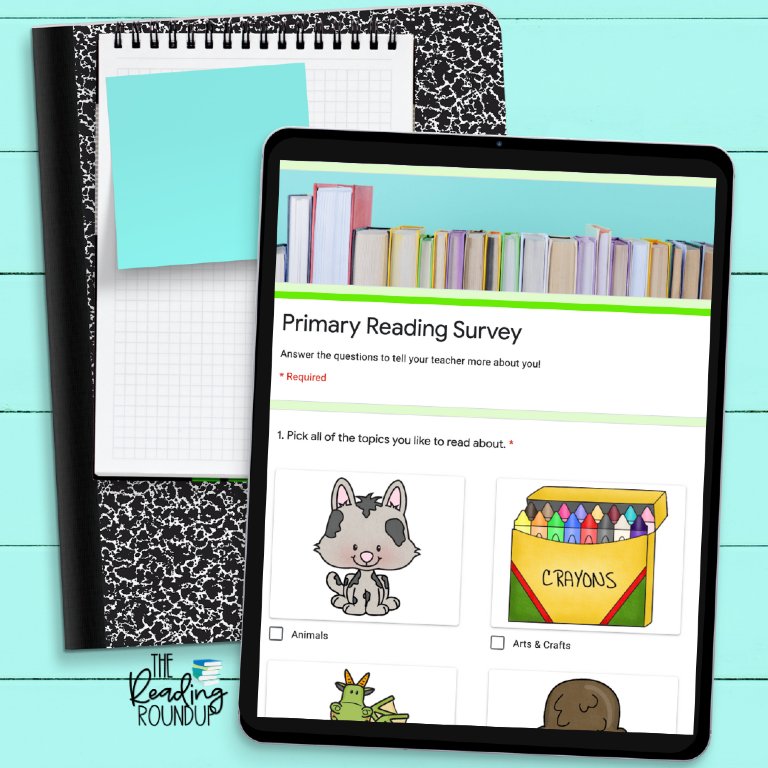
Google Forms or Microsoft Forms are also beneficial options in our digital teaching world. While digital surveys are more appealing for students, the Forms versions appeal to teachers. Student results are automatically compiled for teachers – so simple! What teacher doesn’t love a tool that helps them save time?!
Ways to Compile the Information
So you’ve given the surveys, now what? It helps to organize all of the information into one location so you can easily refer to it while planning.

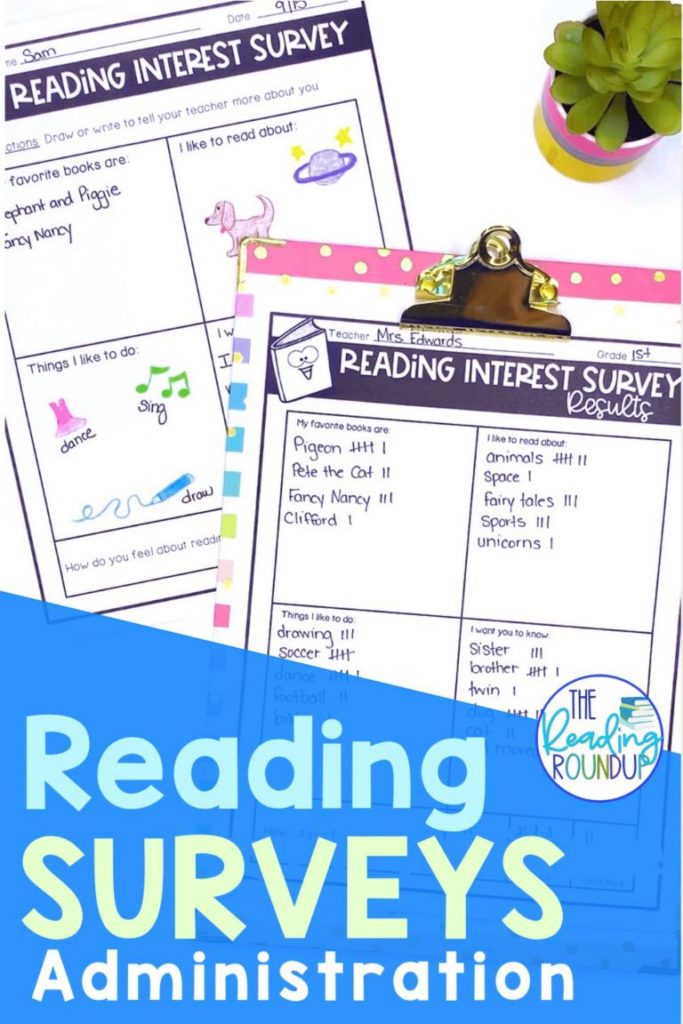
You can compile students’ results onto a single recording sheet. It’s helpful to have a one-page snapshot of students’ interests when planning. I keep this sheet in my lesson plan book to use as a quick reference when selecting texts and planning activities.
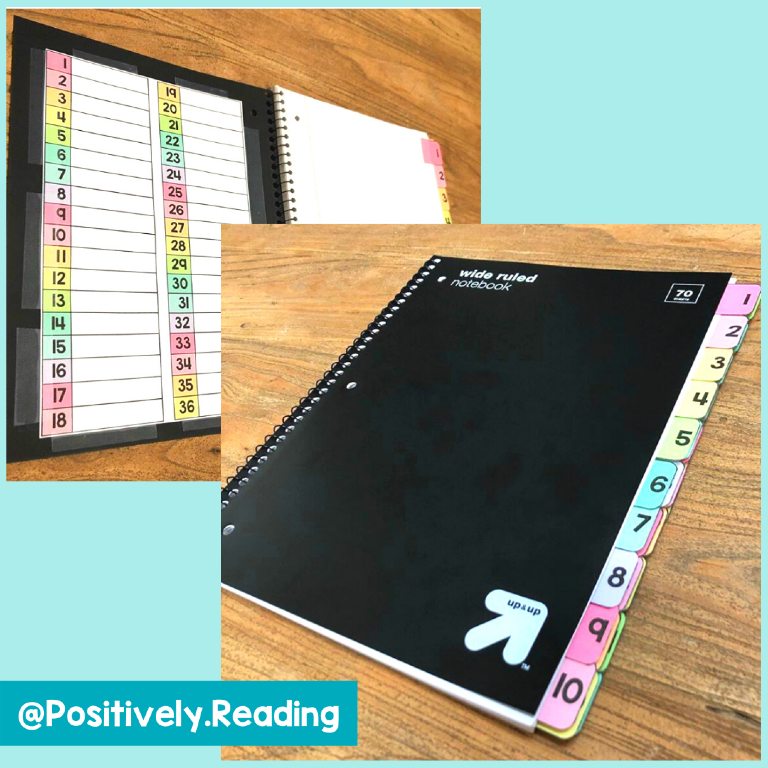
Another option is to record all of the information you learn about students into a notebook. Mandy (FifthwithMissHarris) and Sarah (Positively.Reading) both shared the incredible idea of adding tabs in a notebook for each student! This allows teachers to easily record notes on students’ interests, families, hobbies, events, and other details about their lives. My incredible friend Sarah is even generous enough to share free editable tabs so you can create your own notebook! Check out her post on Instagram for additional tips on setting it up!
How to Use the Infomation
Administering reading surveys are only helpful if you actually do something with the information you learn about students! Some ways you can use the information:
- Provide personalized book recommendations to build a student’s excitement about books. Read a fun way to deliver these book recommendations to students!
- Select mentor texts and small group books based on students’ interests for increased motivation.
- Incorporate students’ interests in instructional activities.
- Engage students in conversations about the details they shared to build stronger relationships. It’s especially helpful when you find things in common to talk about!
How do you use reading interest and attitude surveys with your students? Share in the comments below!
Find out more about the reading surveys I use with my students!


Want to Pin this for later?




I love this so much! I will definitely be administering reading interest surveys once my reading groups are up and running! I’m excited to get to know my students as readers. Thank you for showing us different options and methods for administering them!